


The first piece I wrote on this Substack two years ago was about my year living in an intentional community, about how that lifestyle allowed me to recover from depression when I felt hopeless and fully disillusioned by everything the mental health industrial complex purports to offer. I no longer live in that particular community. I am still as much an advocate for communal living as I’ve ever been, especially as a way to improve mental health long-term, but I’ve been grappling with a litany of complex feelings and grief about my experiences, the way I left, and my life in the aftermath.
See, the thing is, I’m a communalist who failed at community.
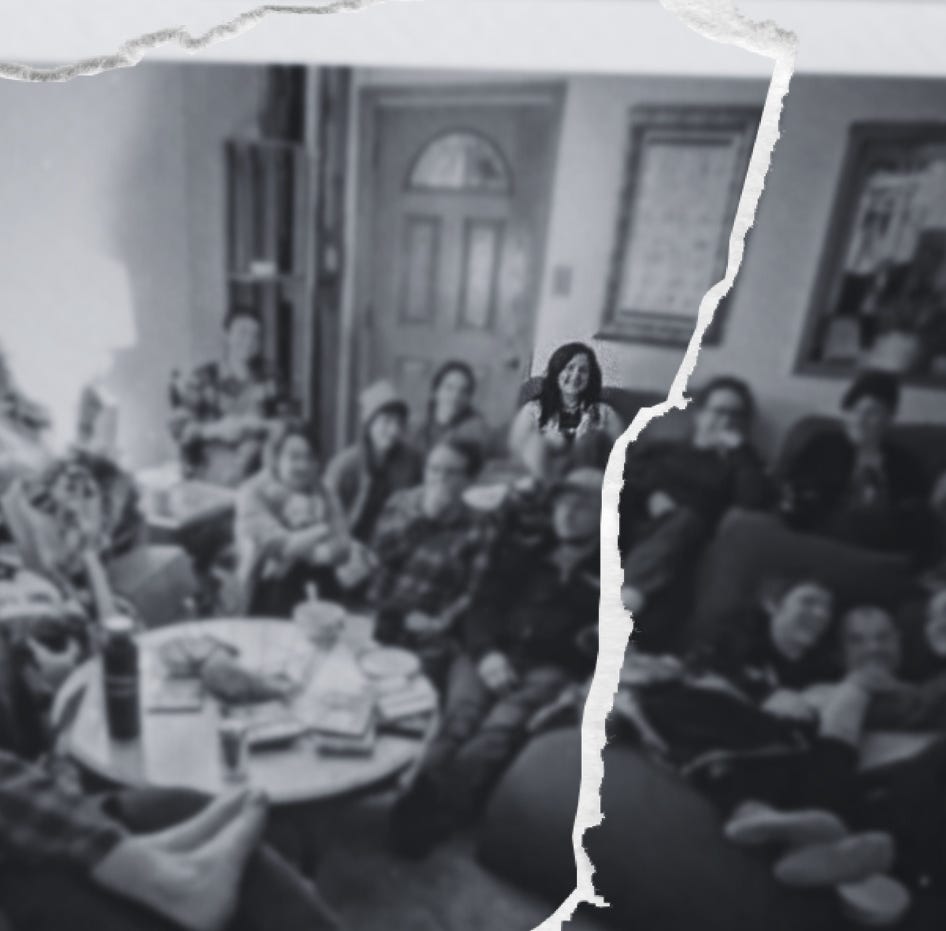
Okay, okay, at least 50% of me now recognizes that this is not entirely true. But on an emotional level, it’s the “truth” that has been resonating in my mind and body for the past two years.
It’s very awkward as a self-identified communalist to have failed at community. Very “who am I now?”
I left my former community abruptly in the midst of a manic and psychotic episode. In truth, I had been recently considering whether a different communal environment might be more suited to my particular needs, but I didn’t intend to leave when I did or the way I did. I felt forced to leave - not directly by the community members, but because of my own high support needs while in an altered state. While communal living did wonders to stave off depression, it contained no magical panacea to prevent mania or psychosis or to manage them.
I still feel an immense amount of shame for the way I left. Disregulated, delusional, paranoid, traumatized after an involuntary hospitalization, I had taken off in the middle of the night on a road trip where I was partially in search of some kind of peer respite or psychiatric rehab facility to ride out my episode that actually felt safe - the kind that doesn’t exist in Pittsburgh - and partially because of a desperate need to put many miles in between myself and anyone who could possibly harm or coerce or constrain me. This sudden road trip led to my former housemates and parents needing to pack up my things from the collective house on my behalf. This particular thing haunts me. Why couldn’t I have just literally and figuratively gotten my shit together just enough to do this one thing? Everything would be different now if I had.
My former housemates watched silently through the window of social media as I liveblogged, raged, rambled, and overshared my way across the country and gradually wound down from psychosis. Their silence never broke. Not when I was hospitalized. Not after I returned home. Not after the episode ended and my polarity flipped into the familiar place I had been fighting so hard to avoid: severe depression.
One year of community. It was good while it lasted. And then it was over. I was back at my parents’ house because I needed direct support with daily living. The year in community dissipated like it never happened at all.
The piercing pain of judgment and shame doesn’t always come through words. Sometimes it comes through a silence louder and sharper than the harshest words could ever be. It comes through the weeks and months of waiting for a text, a call, a letter. A “we miss you, hope you’re okay.” An invitation to the weekly potluck or the annual fall and Christmas parties. I was acutely aware that I could be the one to send those texts, make a call, write that letter. But I was too ashamed and afraid and traumatized to utter a single word to anyone.
Part of me knows that not everyone there wanted to cut me out in the way they did. I imagine that some probably thought that I would reach out again when I was ready. When I never did, they probably assumed I didn’t want to.
But I did want to. I wanted to so, so much. I could not.
Not like, “the idea of doing so was difficult,” but “I literally was not capable.”
In the end, I have not spoken to my former housemates for two years.
In three years, I had lost my community twice due to mental illness.
I was done.
I believe that post-mania bipolar depression is partly neurobiological. It makes sense to me that months of manic intensity would have an impact on the brain - drain the dopamine reserves dry, as it were. And mania exhausts the body, certainly. But I believe that the length of post-manic/psychotic depressive episodes is the direct result of a lack of infrastructural and social support.
The mental health industrial complex doesn’t offer much for bipolar people beyond a regulation of mania. Most doctors don’t care about alleviating bipolar depression nearly as much as they care about stamping out and preventing manic episodes. There are no specific post-mania/psychosis support groups or IOPs. Egregiously, there is effectively no support for cognitive rehabilitation after these manic and psychotic episodes despite post-mania cognitive issues being a nearly universal problem. There are no accessible spaces in which to process and make meaning of the wildly intense and complex experiences we have in psychosis.
Despite the many, many studies emphasizing the importance of social support in long-term recovery and quality of life for people who experience mania and psychosis, barely any infrastructure for this exists.
In the moment we need support the most, we get lithium.
Why do you think one in five bipolar people end up killing ourselves?
It’s not some trick of biology. No one knows what to “do” with us. Not the doctors. Not our friends. We are left completely on our own to try to navigate our way out of the darkness.
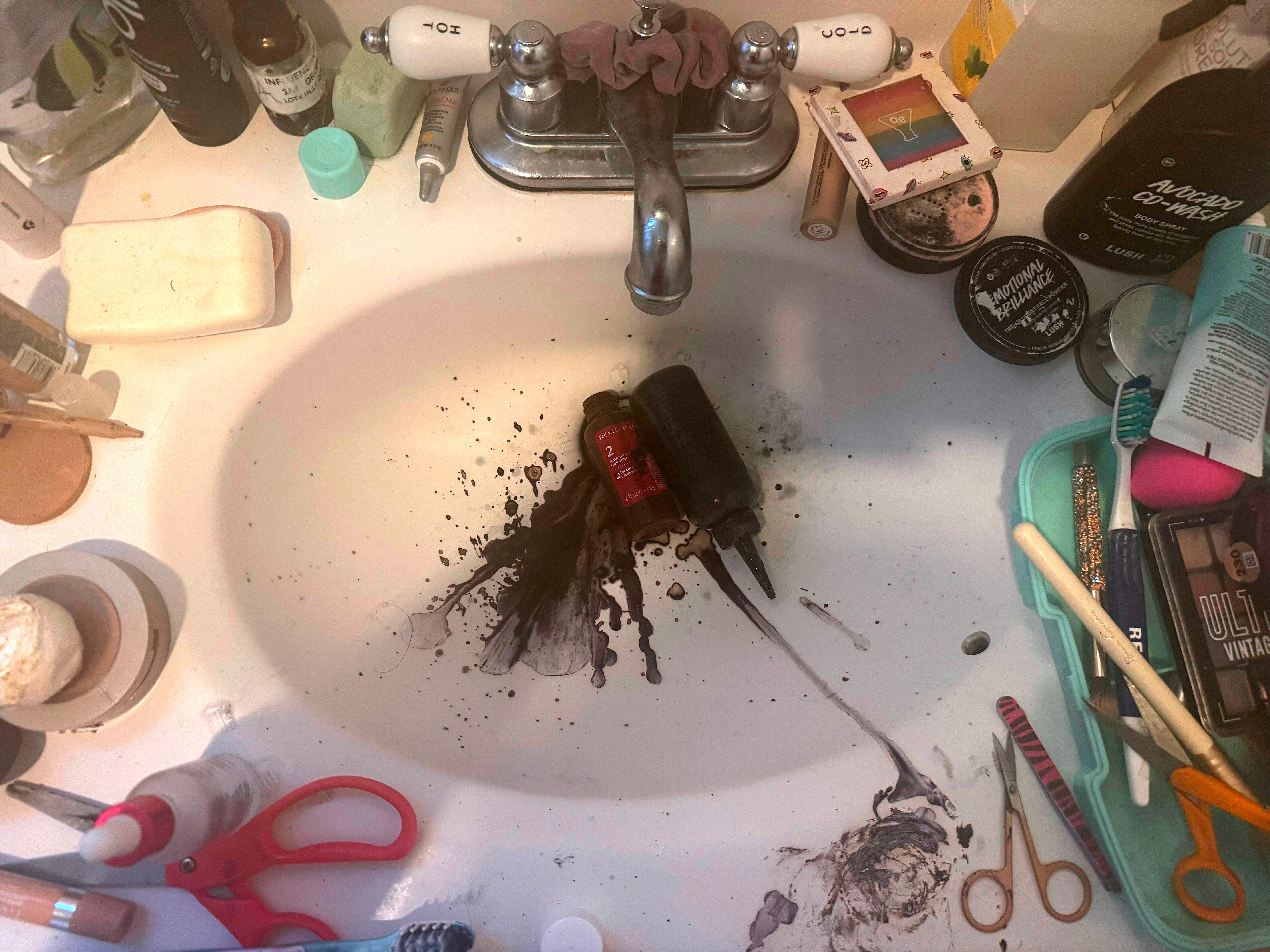
When I clawed my way out of the darkness this time, I wasn’t actually trying to recover from depression.
Actually, I had given up on the idea that recovery was possible.
Clawing my way out of the darkness began like this:
Giving up. Letting myself fall to the bottom of the well. Accepting I would be alone forever. Knowing the rest of my life would look this way. Quitting my job. Applying for disability income. Losing my house. Not caring. Staying in bed. Relying on my parents for everything, like a child.
I have been posting a series of videos on Instagram about the unconventional and very tiny incremental changes that allowed me to crawl from the bottom of the well toward something that looks like recovery. The most important aspect is that I was never trying to “recover.” I wasn’t trying to brute-force myself into new habits or doing any of the then-inaccessible things you are “supposed to do” to help with depression. Instead, I was only ever trying to make my day-to-day life more tolerable. Eventually, after a long time, I built momentum. Once I regained the ability to do certain things that previously seemed impossible (grand exploits like “going to the park and taking a walk”), the possibilities of what I was capable of seemed to multiply very quickly. The horizon opened up and I allowed myself to dream about the future.
Toward the beginning of this depressive episode, I’d watched a Youtube video from psychologist Dr. Scott Eilers with some thoughts about what to do when your depression makes you feel completely hopeless about the future. In his own severe depression, he was miserable and hated his life. He wanted a different life. He thought about the types of life that actually seemed obtainable. Those lives didn’t seem worth living. And then he observed others with seemingly amazing lives - lives that he wished he could be living - but those lives were impossibly out of reach.
So he started considering alternative lifestyles. He said to himself: okay, there is no preexisting model or path to a lifestyle that is both obtainable and tolerable for me. But maybe, just maybe, I can pull in a bunch of different elements from a bunch of places and hash together a weird unconventional life that doesn’t make me miserable.
This stuck with me, even as it still felt impossible for much of my depressive episode. But once I started recovering a little bit, this idea came back. I considered the resources I actually had, and an idea began to form.
I do not have a vehicle. It would be useful to have one.
I have enough money to buy a used vehicle.
What if that vehicle was a van?
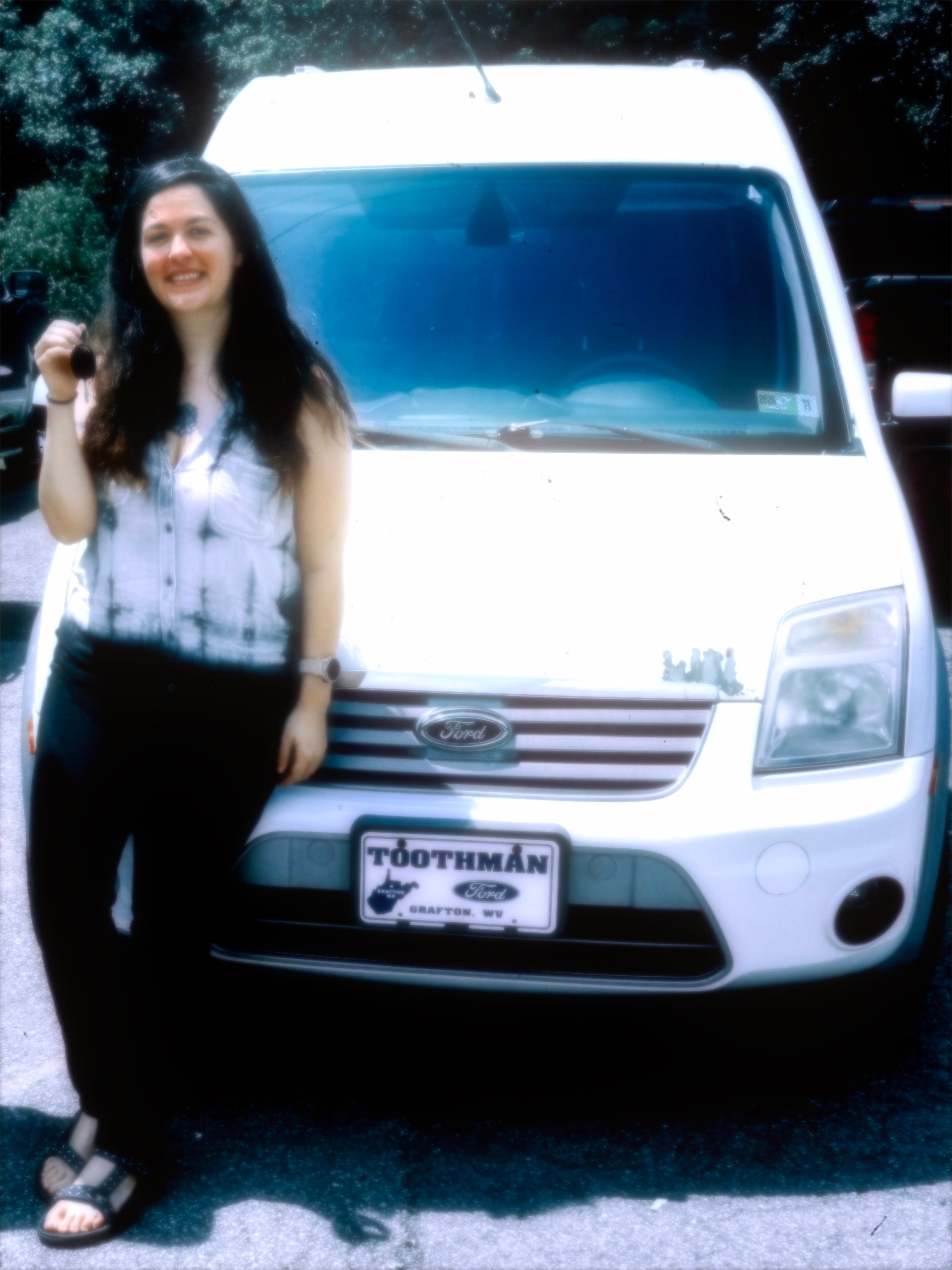
I recovered from depression this time without any community beyond my immediate family (and thank God for them.) I ultimately recovered by building a camper van as a path to a life that wouldn’t make me miserable.
Building the van helped improve my mood and general functioning in myriad ways. It brought me back into my body after many months of dissociation and depersonalization. It deeply engaged my reward and motivation centers. It began restoring my confidence, my sense of autonomy, my belief in my own ability to problem-solve.
It gave me hope about the future.
It was a (literal) vehicle to a life in which I envisioned I would not be miserable. Crucially, a life that did not require a community to be worth living at a time when community felt entirely inaccessible.
I wrestled with this for a long time during the process of building my van and beginning to take trips. For a large part of me, it felt (and sometimes still does feel) like a betrayal of my values. I am a communalist. What I was doing was a hyper-individualist thing. A car-centric-culture thing (ew). I should be working my way back toward community-building, communal living, direct activism. Especially in this political moment. The world is falling apart and you’re traipsing around in the woods in your little van making coffee in your little French press, how utterly privileged.
Part of how I “justified” myself was rationalizing that I was actually trying to do all of these things through van life. I was using what was available and accessible to me as a way to rejoin the world in a basic way after years of intense depression, disconnection, isolation. Vanlifing around is closer to being in community than hiding in my room at my parents’ house. I didn’t quite believe myself about all of this, but I tried.
The truly wild thing is that it was true - it worked.
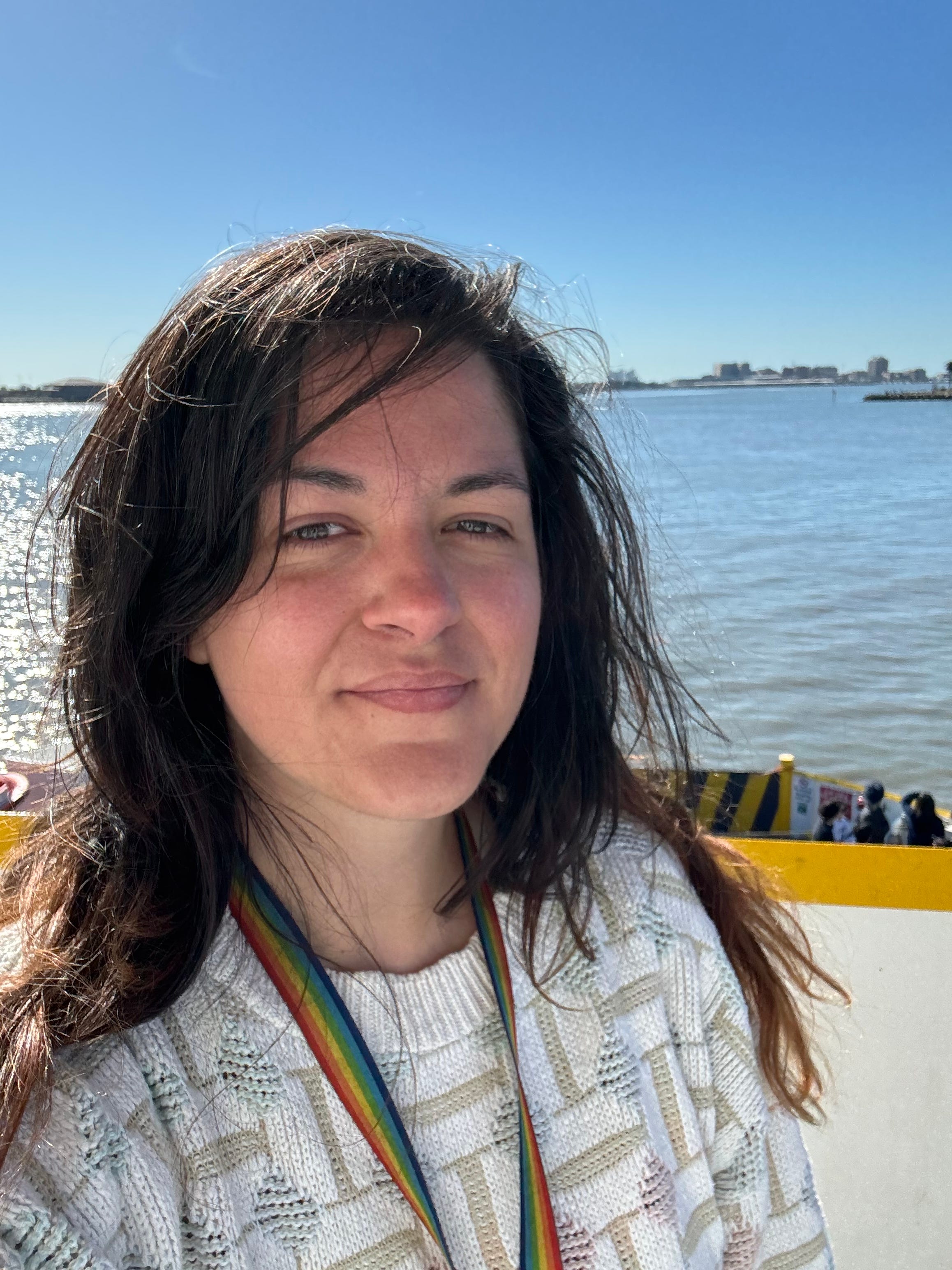
I’ve only taken one longer trip so far, but a few weeks in, something snapped into place. I was taking care of myself without help. I was calm and regulated, spending all my time in the natural world, making simple meals, dragging my solar panels around for power. I was taking long walks everyday, getting exercise. I started being able to feel again. A dog on the beach reminded me of my dog who passed away recently. I cried. I took a ferry to Galveston, Texas. I felt awake. I felt actual happiness for the first time in my recovery. It was a revelation.
With the space to do so, I was also developing self-compassion in a way I was not able to do at home in the depths of depression. Some recognition of the context that created my depression.
A bit of understanding that abandonment is not my fault.
Therapist N. Oumou Sylla recently posted an Instagram reel with a very simple message:
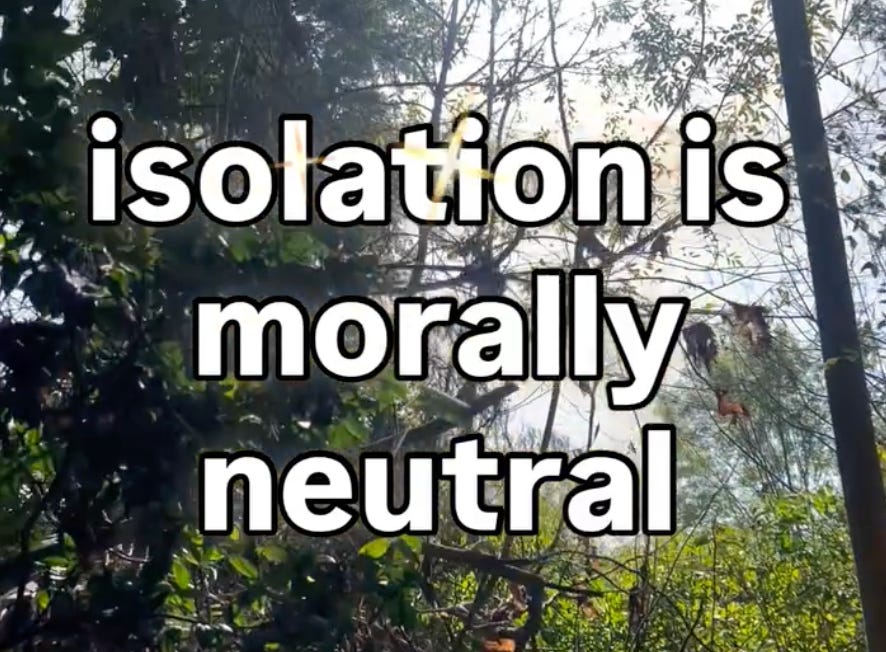
This hit me like a brick.
This idea alone brought so much together. It dissolved so much of my self-judgment about “choosing” to recover in solitude rather than forcing myself back into community when I’ve been multiply-traumatized by communities I thought were safe.
Some truths are:
Isolation was never actually a choice for me. Isolation has been forced upon me by a lack of proper community support on one end and my own PTSD on the other, which prevented me from reaching out to anyone.
I have been doing the best I can with what has been available to me.
There is nothing wrong with choosing to recover alone when finding a safe community to recover in feels impossible.
I didn’t “fail at community.”
In many ways, my communities failed me.
I deserve not just community, but safe community.
The sad reality is that not all communities are safe for everyone.
The sad reality is that for many of us, it’s hard to find a safe community.
Honestly, I felt like I constantly had to mask my neurodivergence to fit in at the intentional community where I lived. That I was constantly being judged for ways I was struggling and not “doing enough” for the house.
Once, a few months into living there, I was called out in a house meeting for saying I was struggling to do one of my house chores. I was still adjusting to being in the house, assessing how often it was necessary to do this chore, and exhausted from working full time. I was actually the ONLY person in the house working full time. The person “calling me out” worked a fully-flexible part-time job. They cried and lamented that “the people with the highest income in the house (me, working full-time because I had massive amounts of debt) are doing the least amount of work.” There was no grace around lower energy levels, executive dysfunction, adjusting to a new lifestyle. My cognitive impairment, mental health issues, and neurodivergent limitations were framed as personal failings.
I heard the way some of my housemates talked about others with mental health issues and neurodivergence. One of the house founders questioned a former housemate’s ADHD diagnosis, writing it off to “being on their phone too much.” In regards to mental health issues and existing in that house, they once said “this isn’t a rehab.”
I could have been more open about the reasons I was struggling - but it didn’t feel safe to be. It seemed likely that the end result would be the same and I would just be framed as “making excuses.”
In part, I bolted the way I did in the altered state because I knew I wouldn’t get the support I needed there in mania and psychosis, and it would cause a bigger rupture and more trauma to stay and try to get that support from my housemates than it would if I ran.
The only people who were truly welcome in that community were the fully-functional, the high-achievers, the non-struggling. People who had it together. And though I was improving over time, that wasn’t me. I was trying my best. And it did help me to be there in so many ways, but I was also sacrificing pieces of myself to exist in that environment.
The truth is, my former community was deeply ableist.
Not every individual there - but some individuals, certainly, and the entire place structurally. While I was there, the house created a system for - no joke - “performance reviews” for each community member. The reviews were directly modeled after the performance reviews that a housemate used in their workplace. For me - struggling with a variety of invisible issues - this felt like a humiliation ritual. This supposedly anti-capitalist intentional community was utilizing a practice lifted directly from a capitalist enterprise to rate people at how “good” they were at existing in their own home.
The thing is - I never did anything egregiously bad or harmful while living there. I wasn’t the kind of terrible roommate you hear horror stories about. I didn’t cause conflict or fight with anyone. I adjusted to my chore routine. I kept shared spaces clean. I never missed my assigned day to cook for my housemates. I chatted at dinner. I helped with and attended the weekly potluck. I missed one monthly workday and one-or-two unofficial workdays in that whole year. I forgot things sometimes. I tried to be open to feedback. I tried to “improve my performance.” I was never doing “enough.” It was never clear what “enough” was. As a neurodivergent person, this was crazy-making.
I could go on, but I think my point is clear:
I deserve better than the way I was treated by that community.
I deserve better than the way that my communities have abandoned me after psychiatric crisis.
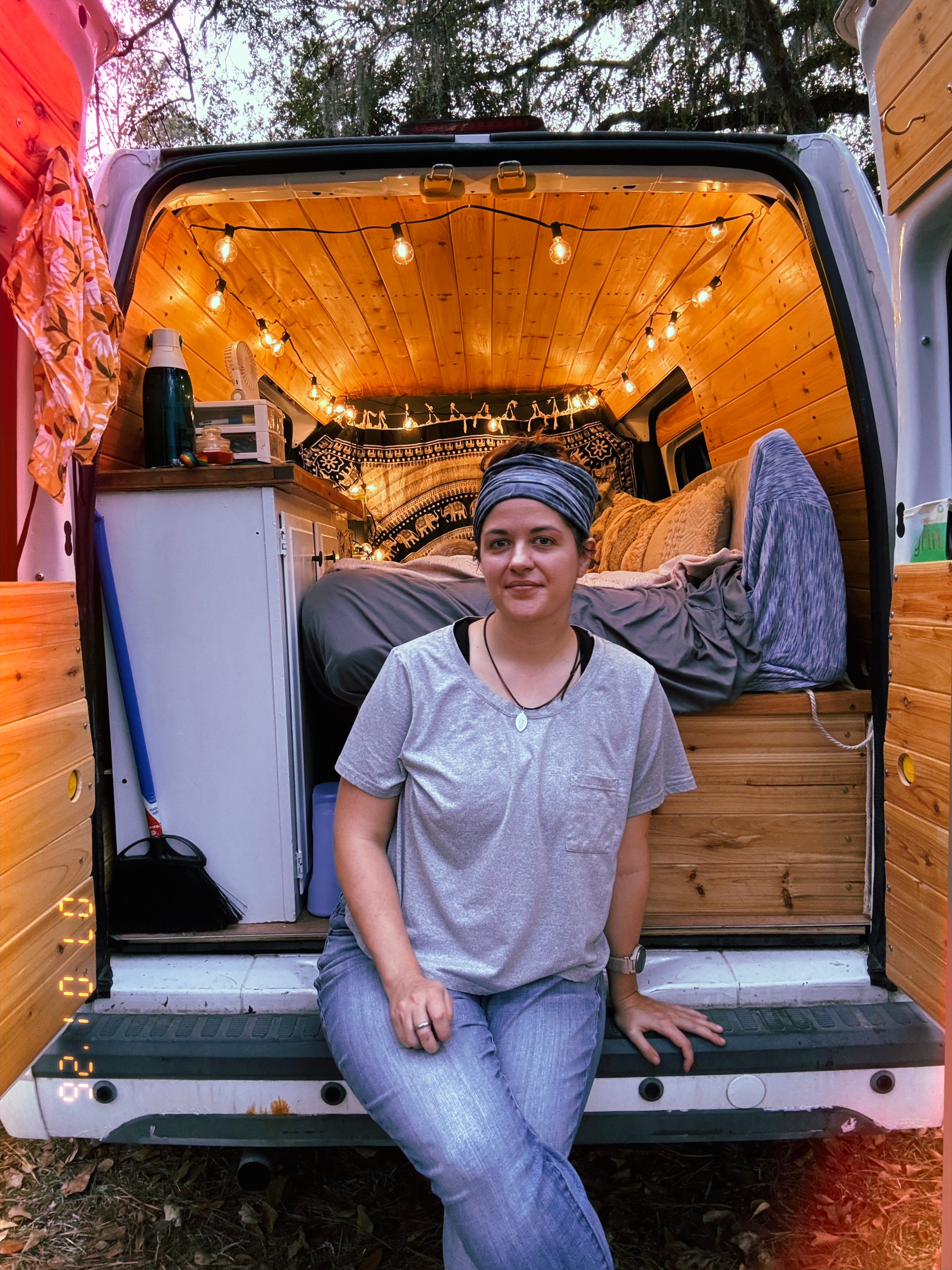
Once I accepted my status as a solitary communalist and started living a life that didn’t make me miserable, something interesting happened: finding community actually started to feel like a possibility again.
It’s been made possible through the recovery of my basic functioning via living a simple life in my van, shaking up the daily routine that kept me feeling stuck, having enough space from my normal life to rethink things and develop some self-compassion, being publicly vulnerable and claiming my truth by sharing writing like this.
It’s been little things like conversations with gas station cashiers on the road and cool older vanlife women striking up conversations in campgrounds and Walmart parking lots. It’s been bigger things like finally feeling brave enough to respond to some messages I was terrified to check, sending voice notes back and forth with an old friend, actually hanging out with a human being one-on-one for the first time in two years (hi, if you’re reading this!)
As I said at the beginning: I am still a communalist. I still believe in the power of community and communal living, especially for mental health. But I also care about myself. I believe that being in an unsafe community can be worse than having no community at all. I plan to move forward by crafting my next community more carefully rather than pigeonholing myself into an unsafe community because I am desperate not to be alone.
It’s possible to recover alone.
Isolation is morally neutral.
It’s okay to be a solitary communalist.